The high taper fade
A high taper starts at or above the temple corner, which is roughly level with the outside edge of your eyebrow. That single placement decision is what makes it read as graphic rather than tidy. It is still a taper, though, which means the weight above it stays.
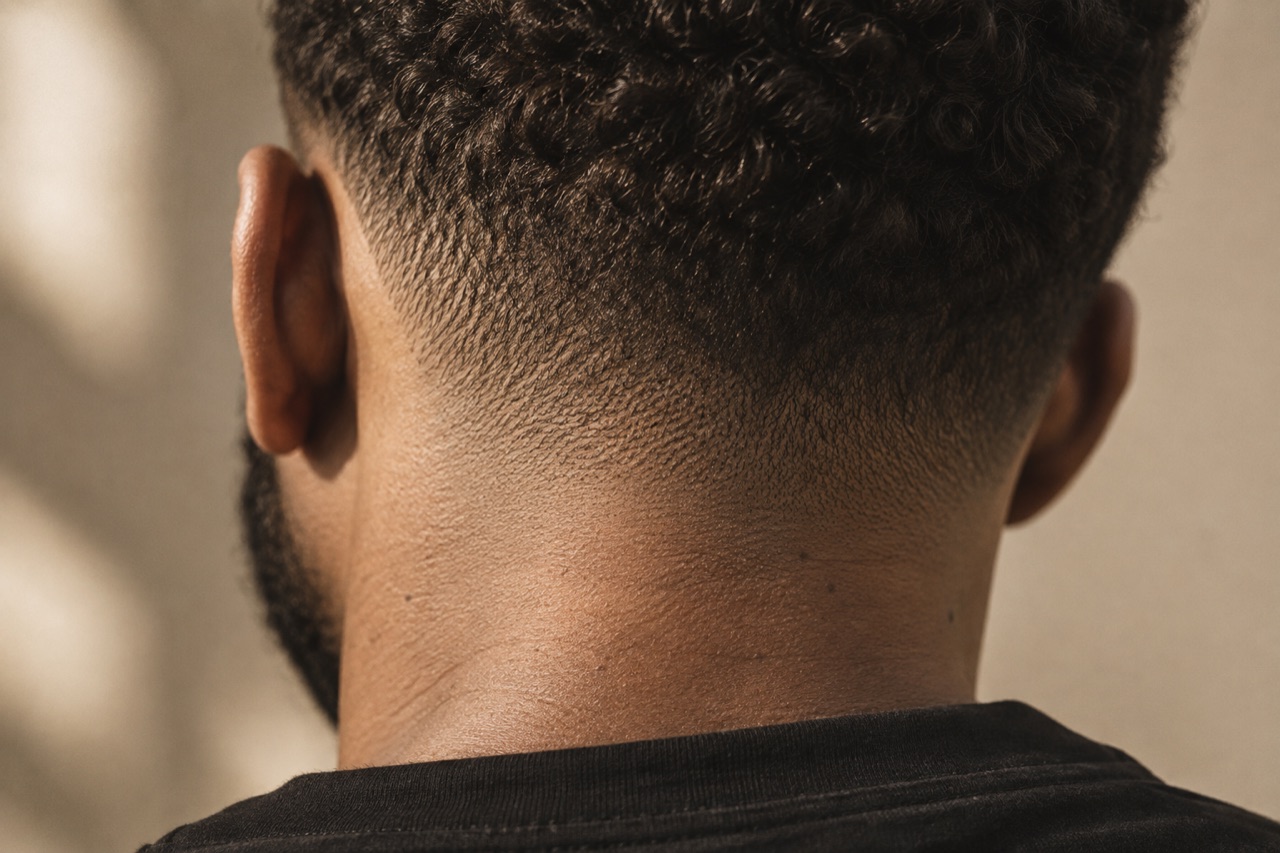
This is the version people usually mean when they bring in a photo from Instagram. It is also the version most often confused with a high fade, which is a different haircut and removes considerably more hair.
Where the line actually sits
Find the corner of your temple, where your hairline turns from the front of your head towards the side. A high taper begins at or just above that point and carries around to the back at the same height.
Compare that to a mid taper, which starts around the middle of your ear, and a low taper, which starts at or just above the earlobe. The difference between them is only two or three centimetres of placement, and yet it changes the whole character of the cut.
| Height | Starts at | Side hair remaining |
|---|---|---|
| Low | Earlobe | Almost all of it |
| Mid | Middle of the ear | Most of it |
| High | Temple corner or above | A narrow band at the top of the sides |
High taper vs high fade
This is the distinction worth getting right before you sit down, because the two words differ by one syllable and by a lot of hair.
A high taper shortens a band around the perimeter, starting high. Above that band, your side hair keeps its length and weight. Looked at from the front, you still have hair on the sides of your head.
A high fade takes the entire side from that height downward, blending from the top length all the way to skin or near-skin. There is no kept band. Looked at from the front, the sides are gone.
How short to finish
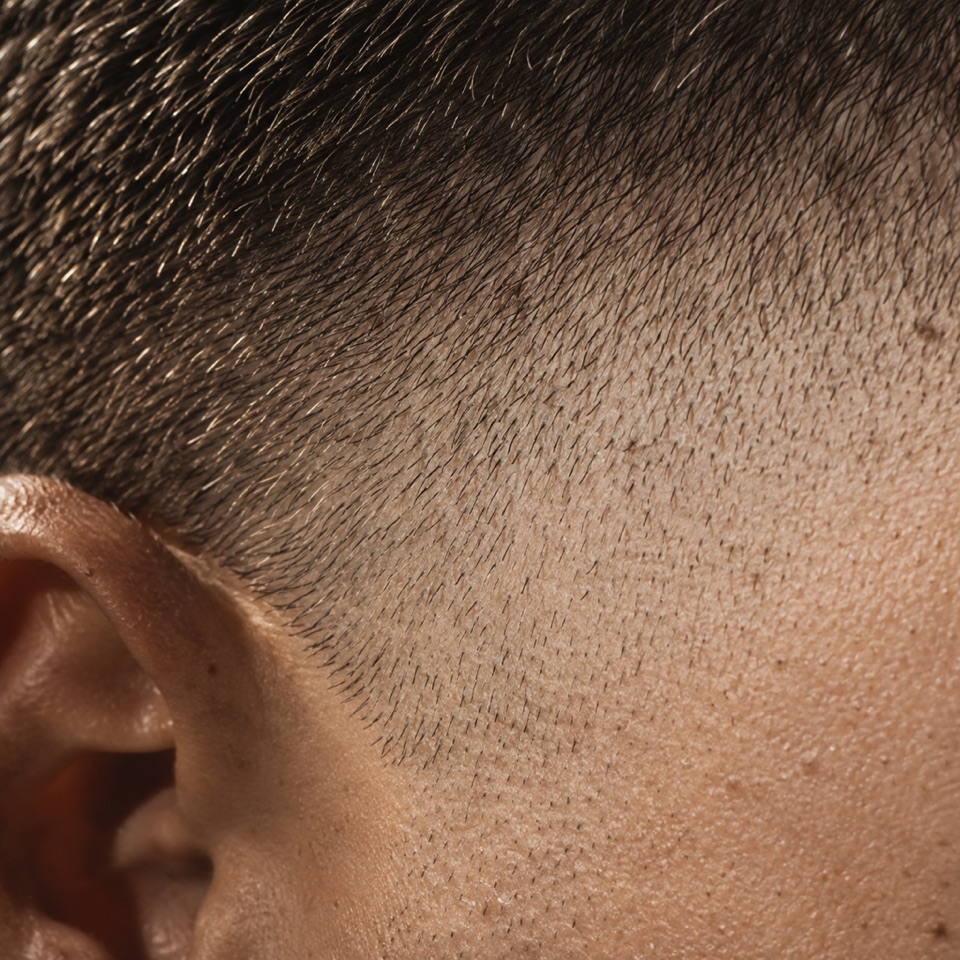
Height and finish are independent. A high taper does not have to go to skin, and plenty of the best looking ones do not.
Maximum contrast against the kept panel. Sharp for about five days.
Keeps the graphic quality without the hard edge. The better choice for most people.
Softest version. The height still reads high, but it grows out without a line.
Because a high taper places the shortest hair so far up your head, the contrast is already strong from the placement alone. Going to skin on top of that can tip the cut from confident into severe. If you have not had a high taper before, start with a shadow finish. You can always go shorter next time, and the guard chart has the exact lengths.
Who it suits
A high taper works with the shape of your head, so it is worth being honest about that before committing.
- Good with a round or full face. Taking the sides short high up adds apparent height and narrows the silhouette.
- Good with dense hair. If your sides build outward and push your hair into a triangle, a high taper removes exactly the bulk causing it.
- Harder with a very narrow or long face. The added height can exaggerate it. A mid taper is usually the better proportion.
- Harder with prominent ears. Taking the hair short above and around them removes the coverage that was softening them. Not a reason to avoid it, but worth knowing in advance.
- Harder if your hairline is receding at the temples. A high taper draws the eye to exactly that area.
What to keep on top
A high taper leaves a lot of room for the top to do the work, and the contrast is the point of the cut. Two combinations account for most of what you see.
Long top, high taper. Four inches or more, worn back or to the side. The strongest contrast and the most styling effort. Needs product and five minutes every morning.
Textured crop, high taper. An inch and a half to two inches, cut with texture through it, worn forward. Far less maintenance, and it holds its shape as it grows.
What does not usually work is a high taper with a very short top. Without contrast, the cut loses its reason to be high, and it can read as an unfinished buzz.
The brief
Say these five things and there is nothing left to guess:
- A high taper, starting at the temple corner. Point to the spot.
- Finishing on a shadow, or name the guard you want at the bottom.
- Keep the weight in the panel above the taper, do not blend it away.
- Name what stays on top, in inches or centimetres.
- Pause and show me the back before you finish.
That fifth point matters more with a high taper than with any other height. The back is where a high taper either looks deliberate or looks like it climbed too far up the occipital bone, and you cannot see it without a hand mirror. Ask for one.
Upkeep, honestly
At roughly 1.25 cm of growth a month, a high taper changes character faster than a low one. The kept panel above the taper grows down into the short area, and the boundary that was crisp becomes soft.
| Finish | Sharp for | Looks fine until |
|---|---|---|
| Skin | About 5 days | 2 weeks |
| Shadow | About 2 weeks | 3 to 4 weeks |
| #1 guard | 3 to 4 weeks | 6 weeks |
If a three week gap between appointments is unrealistic for you, the honest answer is that a high taper on a shadow finish is the shortest version you should choose, and a mid taper would serve you better.
Common questions
What is the difference between a high taper and a high fade?
A high taper shortens a band around the perimeter starting near the temple, and keeps the side hair above that band. A high fade takes the whole side from that height down to skin, leaving no kept panel.
Does a high taper fade have to go to skin?
No. It can finish on a shadow of about 1 millimetre or on a #1 guard at 3 millimetres. The height and the finish are separate choices, and a shadow finish usually looks better on a first high taper.
Can you have a high taper with long hair on top?
Yes, and it is the most common pairing. A taper only affects the perimeter, so the top length is independent. Long on top with a high taper underneath gives the strongest contrast.
How often does a high taper fade need cutting?
With a skin finish, every two weeks. With a shadow finish, every three to four weeks. Finishing on a #1 guard stretches it to around six weeks.
Keep reading
All guidesThe taper fade, from the chair
What a taper fade actually is, how high it can sit, how short it can finish, and how to pick the version that suits your hair and your schedule.
High taper fade on curly hair
A high taper fade on curly hair: shrinkage figures, why to cut dry, and how to keep curl shape on top while cleaning the perimeter.
The mid taper fade
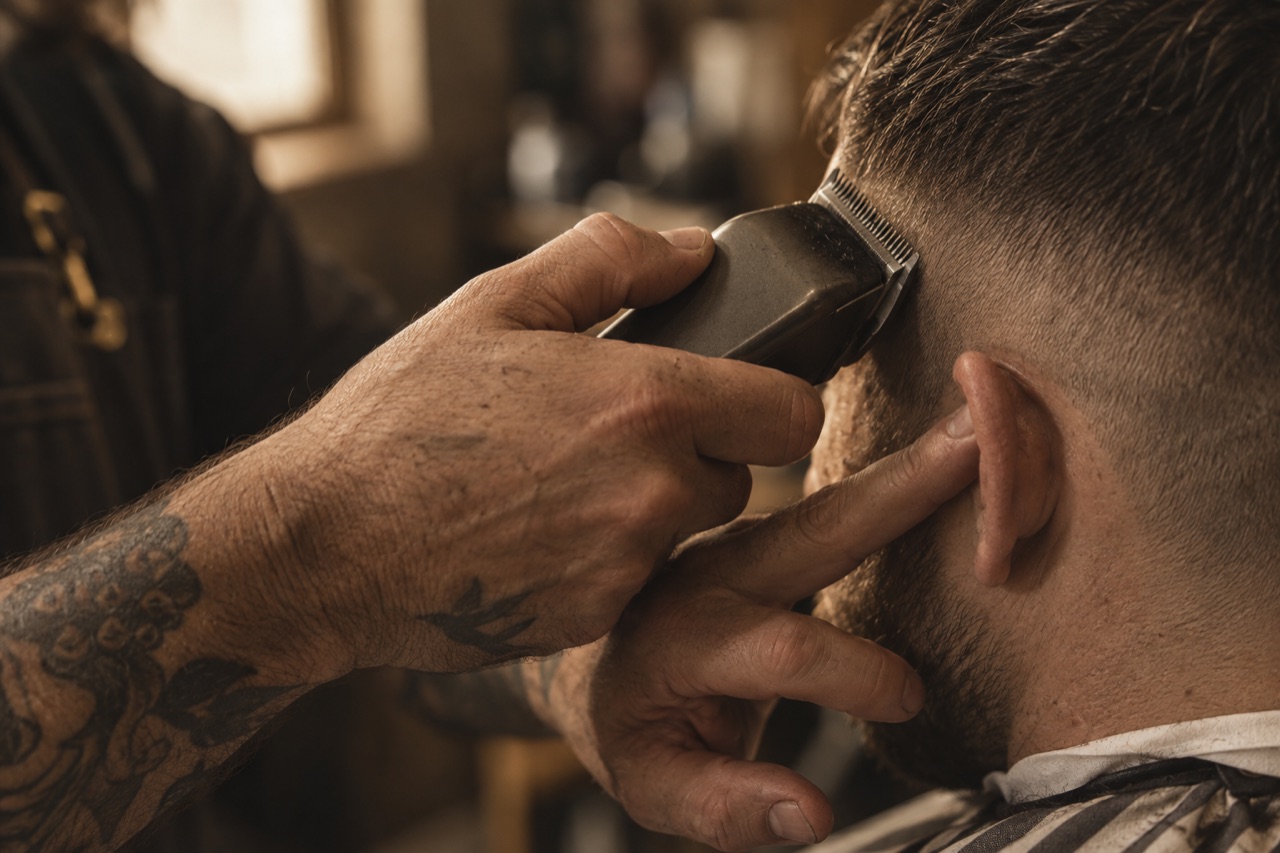
A mid taper fade starts around the middle of the ear. It is the most requested height because it balances contrast against upkeep. Here is how to brief it.