Taper vs fade
These two words get used as if they mean the same thing. They do not, and the confusion costs people haircuts they did not ask for. A taper describes where hair gets shorter. A fade describes how smoothly one length runs into the next. You can have either without the other.
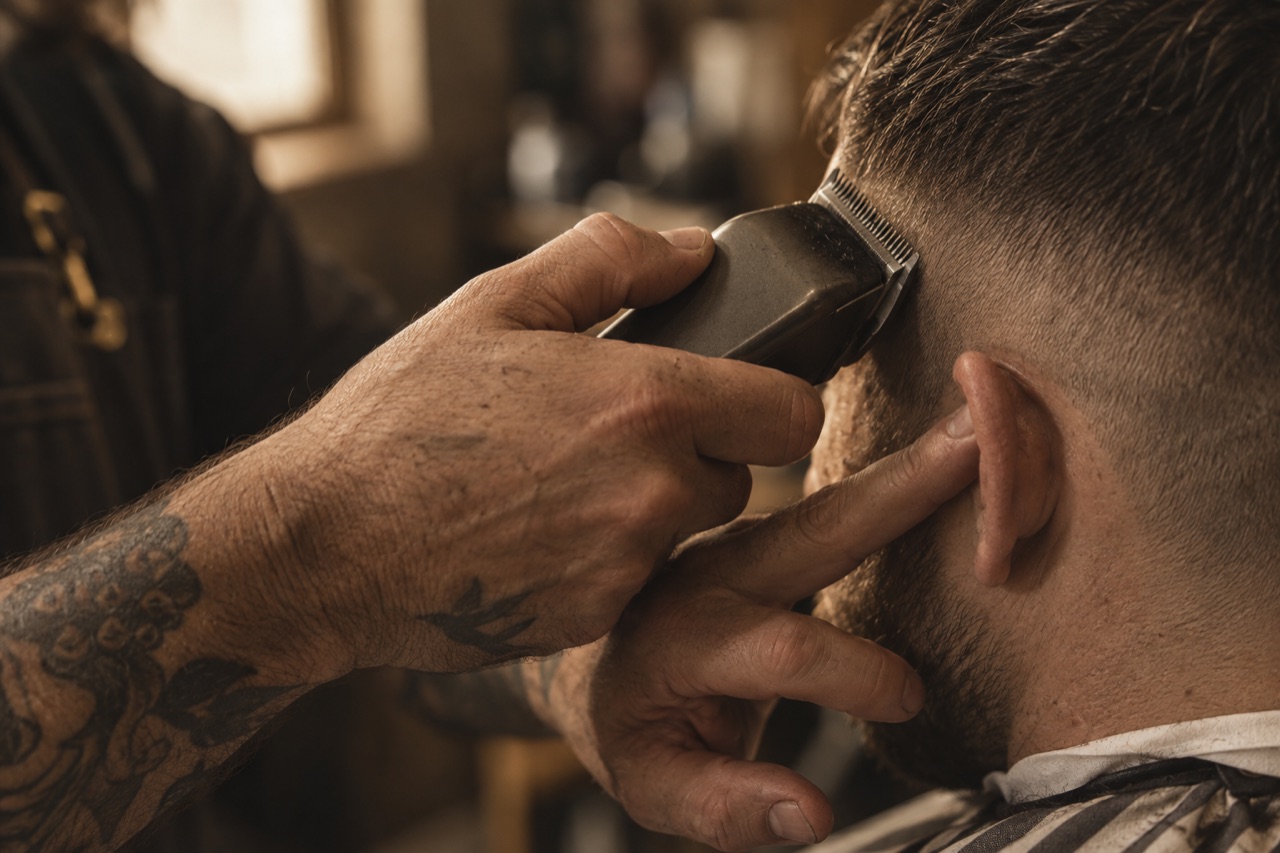
If you have ever asked for one and been asked three follow-up questions, this is why. The two words answer different questions, and your barber needs both answers before they can start.
The short version
| Taper | Fade | |
|---|---|---|
| Answers | Where does the hair get shorter? | How smooth is the change? |
| Covers | The perimeter: sideburns, around the ears, the nape | Any area where two lengths meet |
| Typical result | Sides keep most of their weight above the band | Sides run from long to very short across a wide area |
| Can finish at skin | Yes, but it does not have to | Yes, and usually does |
| Grows out | Gently, because more length remains | More obviously, with a visible line |
So a taper fade is not a contradiction. It is a taper, placed on the perimeter, executed with a fading technique so the lengths blend rather than step.
What a taper actually is
A taper is a band around the edge of your head. It starts somewhere on your sideburn, curves up and over your ear, and carries on across the back of your neck. Within that band the hair gets progressively shorter towards the hairline. Above the band, nothing changes.
Because the affected area is narrow, a taper is a finishing detail rather than a whole haircut. It tidies the edges. Most of your hair is untouched.
What a fade actually is
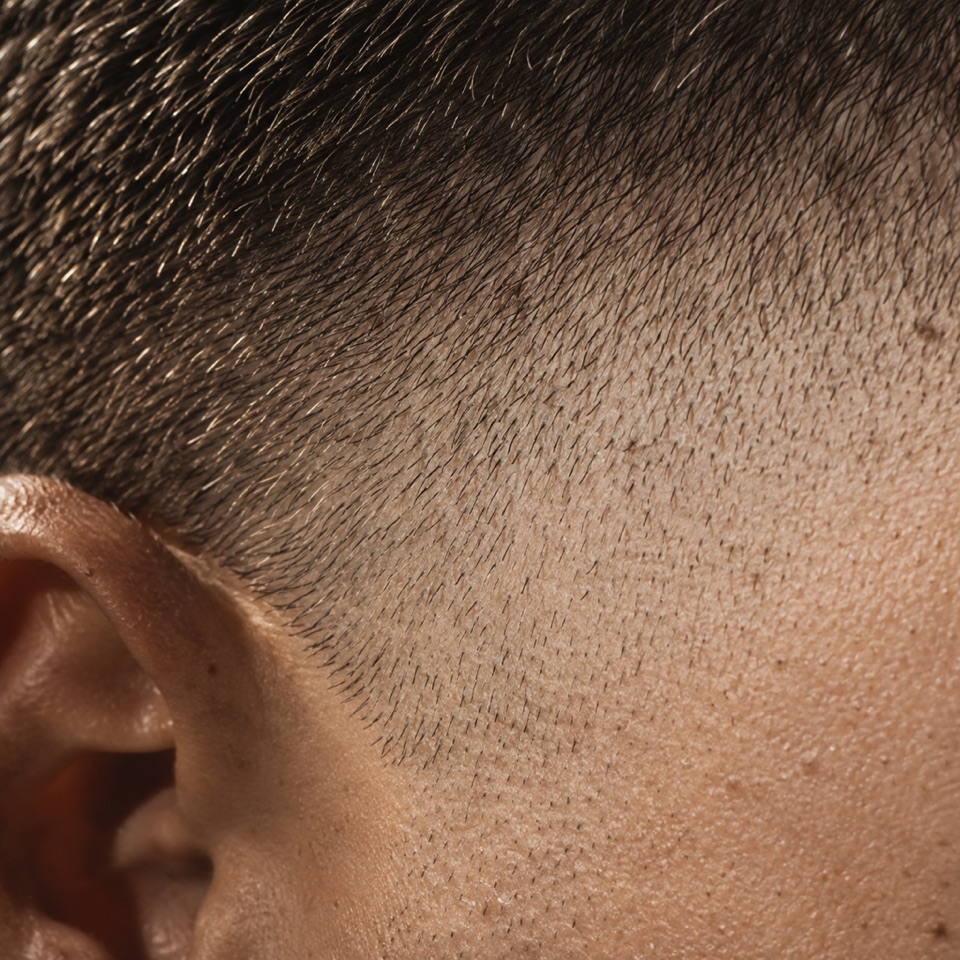
A fade is a blending technique. The barber uses a sequence of guard lengths, then works the boundaries between them until you cannot see where one stops and the next begins. Done well, the result reads as a continuous gradient rather than a set of steps.
The technique says nothing about location. You can fade the whole side of a head from the parietal ridge down. You can fade a two centimetre band at the nape. You can fade the edge of a beard. The word describes the blending, not the map.
In everyday use, though, asking for a fade usually gets you the full-side version: the hair runs from its longest at the top of the sides down to skin or near-skin at the bottom, across a much larger area than a taper touches.
Why the distinction matters at the chair
Consider two customers who both say the word fade.
The first wants their sides tidied and the neckline cleaned up, keeping the general shape they have. They want a taper. If the barber hears fade and delivers the full-side version, that customer loses far more hair than they expected, and there is no undoing it for a month.
The second wants the dramatic contrast of short sides against a longer top. They want a fade. If the barber gives them a low taper instead, they walk out feeling like nothing happened.
Same word, opposite outcomes. This is the entire reason barbers keep asking follow-up questions rather than just cutting.
How to tell which one you want
Two questions settle it almost every time.
- Look at your sides in a mirror. Do you want most of that hair to still be there afterwards? If yes, you want a taper. If you want it substantially shorter across the whole side, you want a fade.
- Do you want a visible contrast between top and sides, or a tidy version of what you have? Contrast points to a fade. Tidy points to a taper.
| If you want | Ask for |
|---|---|
| A cleaner neckline, nothing dramatic | A low taper |
| A tidy edge with a little shape | A mid taper |
| Noticeable contrast, but weight kept on the sides | A high taper |
| Short sides running up into a longer top | A fade, and name the height |
| Short sides with no exposed scalp | A fade finishing on a #1 or #2 guard |
The grow-out difference
This is the practical argument, and it gets overlooked. A taper leaves more length in the affected area, so as it grows the shape softens rather than breaking. A full fade leaves very little, so the boundary between the faded area and the hair above it becomes visible as a line within a couple of weeks.
If you cut your hair every two or three weeks, that is not a problem. If you stretch appointments to six or eight weeks, a taper will look presentable for far more of that window. There is more detail on timing in the taper fade guide.
The wording that actually works
Neither word is enough by itself. Combine location with technique and finish, and there is nothing left to guess:
A mid taper, blended soft, finishing on a one. Leave the weight above it.
That sentence names where it sits, how smooth it should be, how short it ends, and what to leave alone. Compare it to the word fade on its own, and you can see why one produces predictable haircuts and the other does not.
If the guard numbers in that sentence are unfamiliar, the guard chart lists every one in millimetres.
Common questions
Is a taper fade a taper or a fade?
Both. It is a taper by location, sitting on the perimeter around the ears and nape, and a fade by technique, meaning the lengths are blended smoothly rather than left as visible steps.
Which is shorter, a taper or a fade?
A fade usually removes more hair overall because it covers a much larger area. But a taper can finish just as short at the hairline. The difference is how much of your head is affected, not how short the shortest point is.
Is a taper more professional looking than a fade?
A taper is more conservative because it keeps most of the side weight and grows out gently. Whether that reads as more professional depends entirely on your workplace, but a low taper is the safest default in a formal setting.
Keep reading
All guides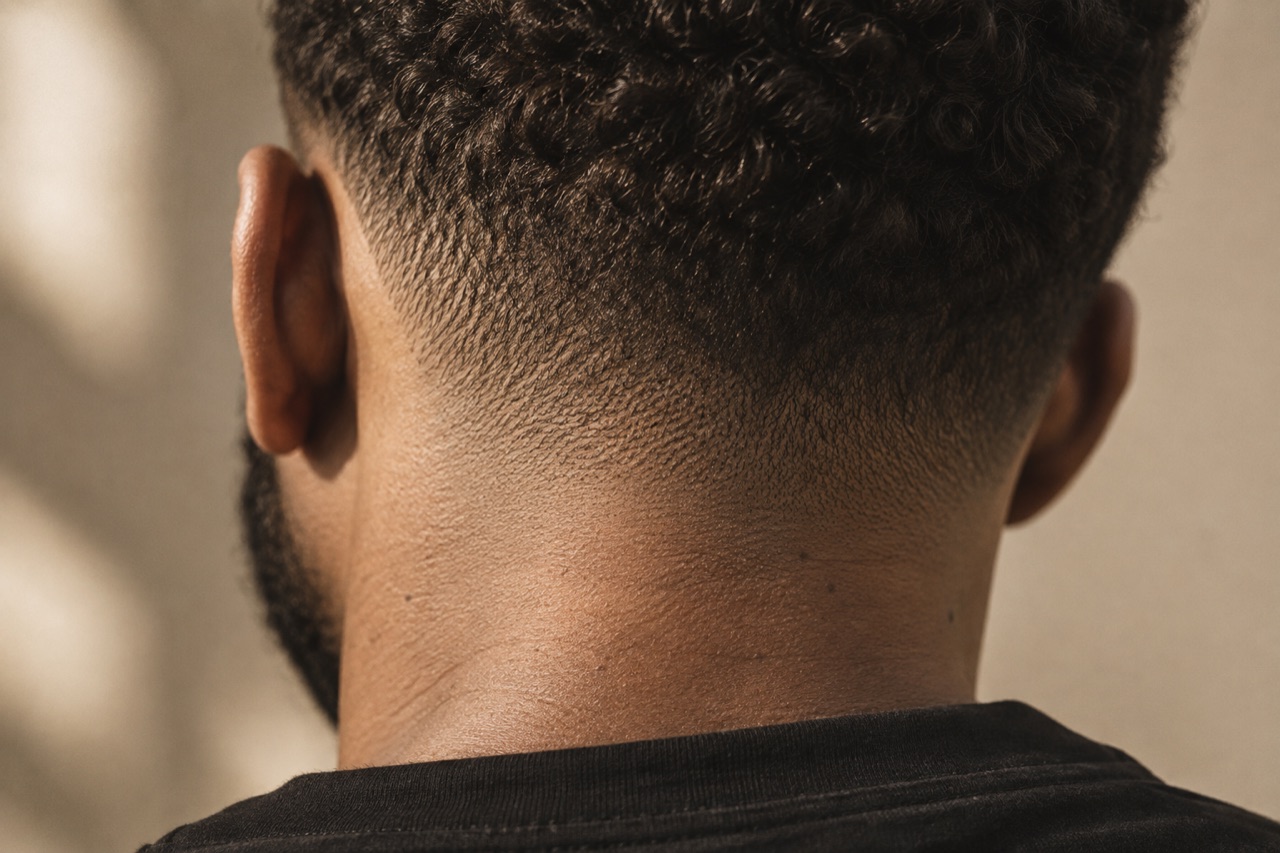
The taper fade, from the chair
What a taper fade actually is, how high it can sit, how short it can finish, and how to pick the version that suits your hair and your schedule.
Haircut numbers: clipper guards in millimetres
Haircut numbers explained. Every clipper guard from #0 to #8 with its length in millimetres and inches, and where each one belongs on a head.
The high taper fade
Where a high taper actually starts, how it differs from a high fade, how much side weight you keep, and the wording that gets you the version you want.