The mid taper fade
A mid taper starts around the middle of your ear, roughly halfway between a low and a high. It is the most requested of the three heights, and for good reason: it gives you visible shape without the two week maintenance cycle that higher, shorter versions demand.
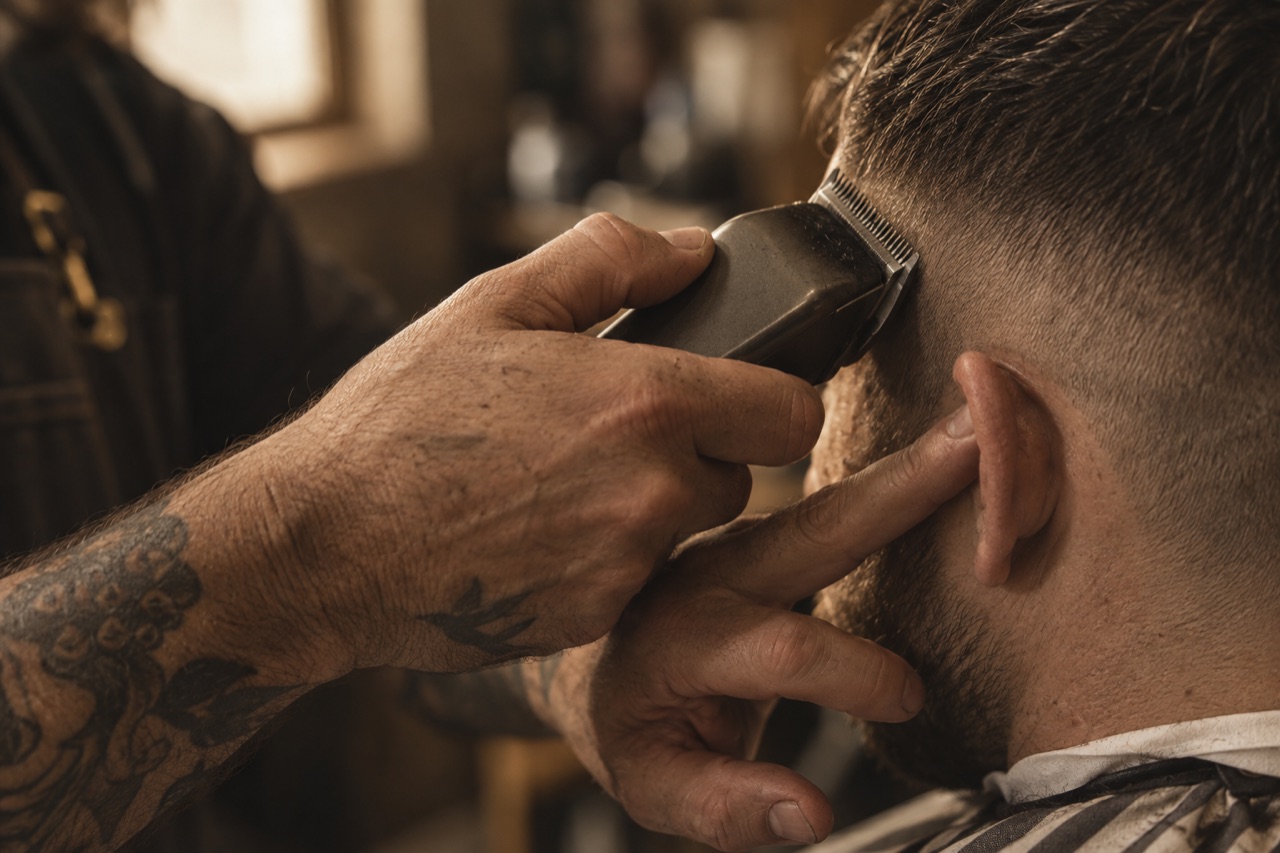
If you are not sure which height to ask for, this is the one to start with. It is the default for a reason, and it is easy to adjust in either direction next time once you have seen it on your own head.
Where it sits
The taper begins level with the middle of your ear and carries around the back at that height. From the front you can see that something has been done, but the sides still read as having hair on them.
| Height | Starts at | Visible from the front |
|---|---|---|
| Low | Earlobe | No |
| Mid | Middle of the ear | Slightly |
| High | Temple corner | Clearly |
That middle column is genuinely the whole difference. The three heights are separated by two or three centimetres of placement, and yet they produce quite different haircuts.
Why it is the safe default
Two reasons, and they pull in opposite directions everywhere else.
It shows. Unlike a low taper, a mid taper is visible in ordinary conversation. You get credit for having had a haircut.
It survives. Unlike a high taper, there is still a decent band of kept hair immediately above the short area, so as it grows the boundary softens instead of collapsing. A mid taper at four weeks still looks deliberate.
How short to finish
The same three finishes apply, and the choice still matters more for upkeep than the height does.
High contrast. A mid skin taper is a sharp, modern looking cut on a two week cycle.
Most of the crispness, roughly double the lifespan. A good middle position.
The five to six week option. Still clearly a taper, just softer at the edge.
Exact lengths for every guard are in the guard chart if you want to name something more specific than a #1.
The transition is where it goes wrong
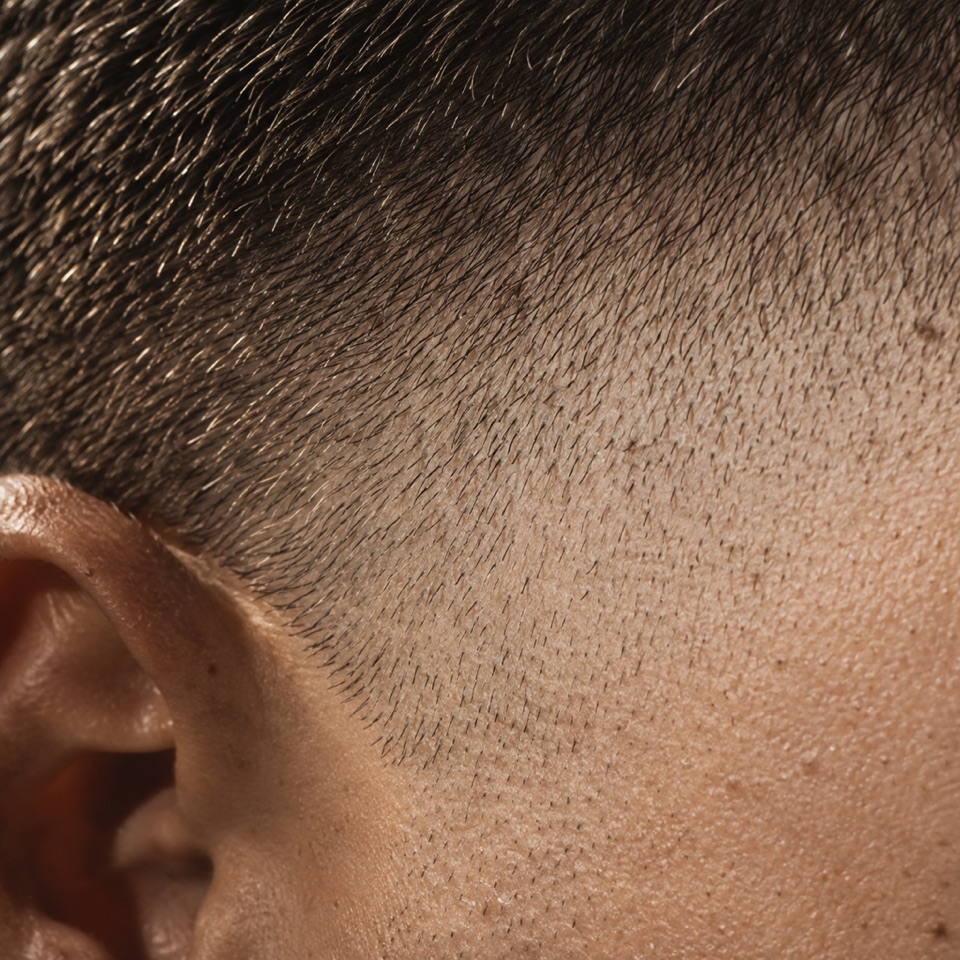
A mid taper sits in the middle of the side of your head, which means the blend above it happens in full view. On a low taper you can get away with a slightly abrupt transition because it is hidden below the ear. On a mid taper you cannot.
The failure mode is a shelf: a visible horizontal ledge where the kept hair sits proud of the tapered area. It is most common on thick straight hair, because that hair has enough body to stand out rather than fall over the step.
Two things prevent it. Ask for a longer blend zone, meaning the barber spends more of the side gradually transitioning rather than changing length quickly. And ask for weight to be removed above the taper with scissors or a thinning technique, so the kept hair lies down instead of projecting.
Who it suits
- Most face shapes. Mid placement does not exaggerate length or width much in either direction.
- Thick hair that builds outward. The taper starts high enough to remove bulk where it actually accumulates.
- Anyone on a four to five week cycle. This is the height that matches that interval best.
- A first fade where you want it to be noticed. Enough contrast to feel like a change, not enough to feel exposed.
If your face is long and narrow, consider a low taper instead, since keeping side weight preserves width. If you want strong graphic contrast against a long top, a high taper delivers more of it.
The brief
- A mid taper, starting at the middle of the ear.
- Finishing on a #1, or name skin or shadow.
- Blend it long, I do not want a shelf.
- Take some weight out above the taper so it lies flat.
- Tapered neckline at the back.
- Show me the back before you finish.
Line three is the one that saves the haircut. Saying blend it long tells your barber to spend time on the transition rather than getting the length change done quickly, and that is the difference between a mid taper that looks expensive and one that looks like a step.
Common questions
Where does a mid taper fade start?
Level with the middle of the ear, roughly halfway between a low taper at the earlobe and a high taper at the temple corner.
Is a mid taper better than a low taper?
Neither is better. A mid taper is more visible and removes more bulk. A low taper keeps more side weight, suits narrow faces better, and lasts longer between cuts.
How long does a mid taper fade last?
Finishing on a #1 guard, about five weeks before it needs attention. On a shadow finish, three to four weeks. On skin, around two.
What is a shelf in a taper fade?
A visible horizontal ledge where the kept hair above the taper sits proud of the shortened area. It usually means the blend zone was too short, and it is most common on thick straight hair.
Keep reading
All guides
The taper fade, from the chair
What a taper fade actually is, how high it can sit, how short it can finish, and how to pick the version that suits your hair and your schedule.

The low taper fade
A low taper starts at the earlobe and keeps almost all your side weight. Here is how short it can finish, who it suits, and why it is the easiest fade to live with.
The high taper fade
Where a high taper actually starts, how it differs from a high fade, how much side weight you keep, and the wording that gets you the version you want.