How to ask for a taper fade
Most disappointing haircuts are communication failures, not skill failures. The barber did something reasonable with incomplete information. This is the five part brief that removes the guesswork, in the order the cut is actually built.

You do not need barber vocabulary to get a good haircut. You need to answer five questions before anyone starts cutting. Here they are, with wording you can use directly.
Part 1: name the height
Say low, mid, or high, then point to the place on your own head where you mean the short area to begin. Pointing is not optional. The words mean slightly different things to different barbers, and your finger removes the ambiguity in a second.
| Say | Point to |
|---|---|
| A low taper | Your earlobe |
| A mid taper | The middle of your ear |
| A high taper | The corner of your temple |
If you genuinely do not know, say so and ask for a mid taper. It is the most forgiving height and the easiest to adjust next visit.
Part 2: name the finish
This is the shortest point, right at your hairline. It decides how often you will be back, so it deserves more thought than the height.
- Skin. Bare scalp. Sharp for about five days, then visible regrowth. A two week cycle.
- Shadow. A soft grey haze, around 1 millimetre. Most of the crispness, roughly double the lifespan.
- A guard number. Usually a #1 at 3 millimetres. The most forgiving over five or six weeks.
Guard numbers are the most precise thing you can say. The full chart lists every one in millimetres if you want to name something specific.
Part 3: say how the blend should behave
Above the taper, the kept hair either steps or blends. Barbers have preferences, and they will apply theirs unless you say otherwise.
For a soft, grown-in look, say: blend it long, and keep the weight above the taper. That asks for a gradual transition over more of the side, with the length above left intact.
For a defined, structured look, say: keep a clean line where the taper stops. That asks for a deliberate visible boundary.
If you have thick straight hair and you do not want a shelf sitting proud above the taper, the first option is the one you want, and it is worth adding that you would like some weight taken out with scissors so the kept hair lies down.
Part 4: name the top in numbers
This is where most briefs fall apart. Short, a bit off, and not too much are not measurements. Give a number, or give a reference you can both see.
| Instead of | Say |
|---|---|
| A bit off the top | Two centimetres off, keep the weight |
| Keep it long | Leave four inches, just tidy the ends |
| Short on top | About an inch, with some texture through it |
| Tidy it up | Same length, clean the edges only |
If numbers feel awkward, pinch a length between your fingers and show them. Barbers read that instantly, and it is more reliable than adjectives.
Part 5: ask for two checks
These two requests cost nothing and prevent most regret.
- Pause before you take anything to skin. Skin cannot be undone. A ten second look in the mirror first is worth it.
- Show me the back before you finish. Ask for a hand mirror. The nape is what everybody behind you sees and the one part you never inspect.
Nobody minds being asked. A barber who resists either of these is telling you something useful about how the rest of the appointment will go.
Put together
The whole brief, spoken naturally, takes about twenty seconds:
A mid taper starting here, finishing on a one. Blend it long and keep the weight above it. Two centimetres off the top. Show me the back before you finish.
That is height, finish, blend, top and check, in order. Nothing in it requires barber vocabulary, and there is nothing left for anyone to guess.
On reference photos
Bring one, but understand what it can and cannot do. A photo is excellent for showing height and finish, because those are geometric and visible. It cannot promise the same result, because the hair in the photo is not your hair.
Two things make a reference photo genuinely useful. Pick one where the model's hair texture resembles yours, and pick one showing the angle you care about. Most people bring a front-on shot, which is the view that says least about a taper. A profile or a rear shot communicates far more.
What to say when it is wrong
Say it before you leave the chair, while it is still fixable. Be specific about the thing rather than the feeling.
- Too high? Say so immediately. Not fixable, but they can soften the boundary.
- Shelf above the taper? Ask them to blend it further up and take weight out.
- Neckline too square? Ask for it tapered instead. Almost always fixable on the spot.
- Too short on top? Nothing to be done today. Note it and say a smaller number next time.
- Uneven sides? Point at the specific spot. Barbers would much rather fix it than have you notice at home.
Leaving unhappy and saying nothing guarantees the same haircut next time. One specific sentence usually fixes it within a minute.
Common questions
What do I say to a barber for a taper fade?
Name the height and point to it, name the finish such as skin, shadow or a #1 guard, say whether you want a long soft blend or a defined line, give the top length as a number, and ask to see the back before they finish.
Should I bring a photo to the barber?
Yes, but choose one where the hair texture resembles yours and which shows a profile or rear view rather than a front-on shot. A photo communicates height and finish well, but it cannot promise the same result on different hair.
What guard should I ask for on the sides?
A #1 at 3 millimetres is the most common base for a taper that does not go to skin. A #2 at 6 millimetres is a safe choice if you want no scalp showing at all.
Is it rude to ask the barber to stop and check?
No. Asking them to pause before going to skin, and to show you the back with a hand mirror, are both normal requests. Skin cannot be undone, which makes the pause worth asking for.
Keep reading
All guides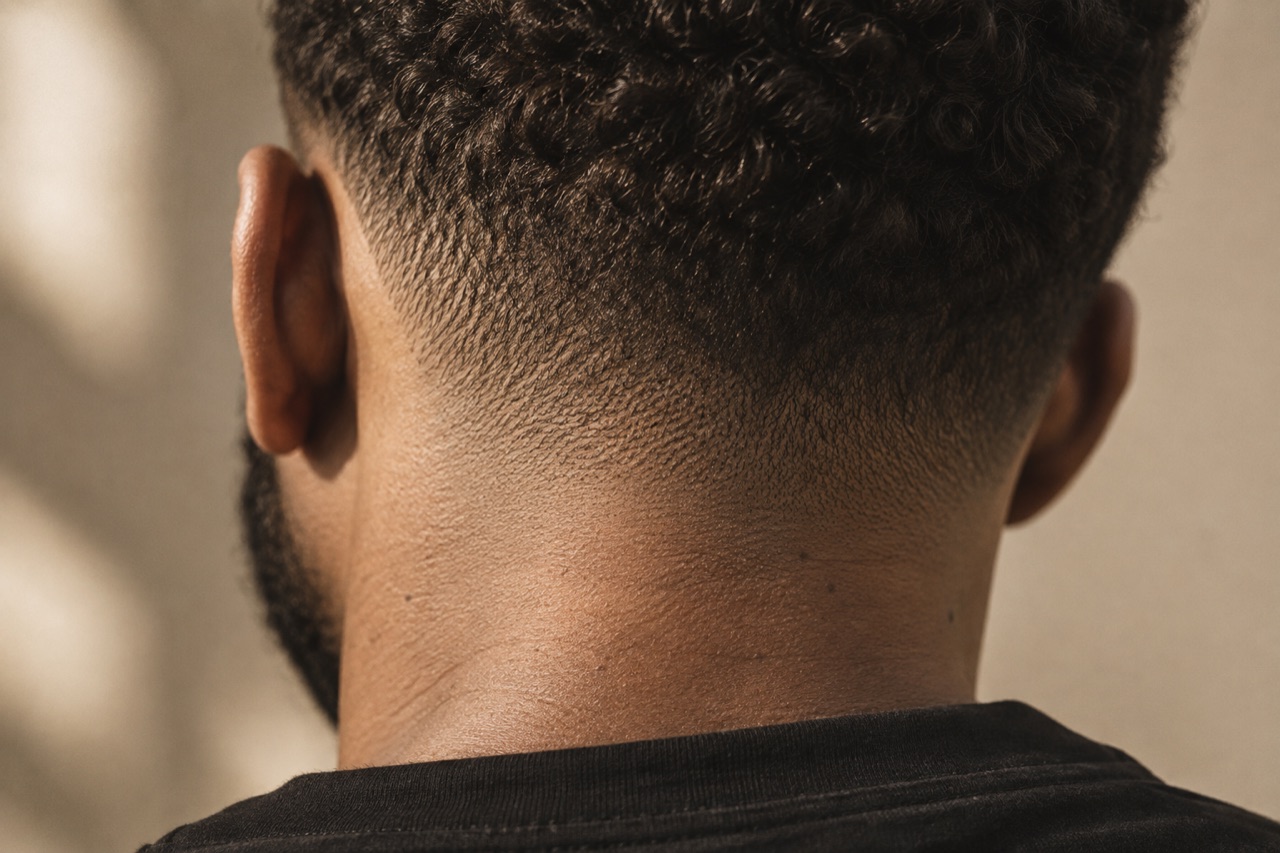
The taper fade, from the chair
What a taper fade actually is, how high it can sit, how short it can finish, and how to pick the version that suits your hair and your schedule.
Haircut numbers: clipper guards in millimetres
Haircut numbers explained. Every clipper guard from #0 to #8 with its length in millimetres and inches, and where each one belongs on a head.
Taper vs fade
Taper vs fade: a taper is a place, a fade is a technique. What each word describes, why barbers keep asking you to clarify, and which one you probably want.