High taper fade on curly hair
Curly hair changes two things about a high taper, and both of them are about length. Curls shrink, so the length you cut is not the length you see. And curls hide the blend, which is genuinely an advantage. Get the cutting method right and this is one of the best textures for the cut.
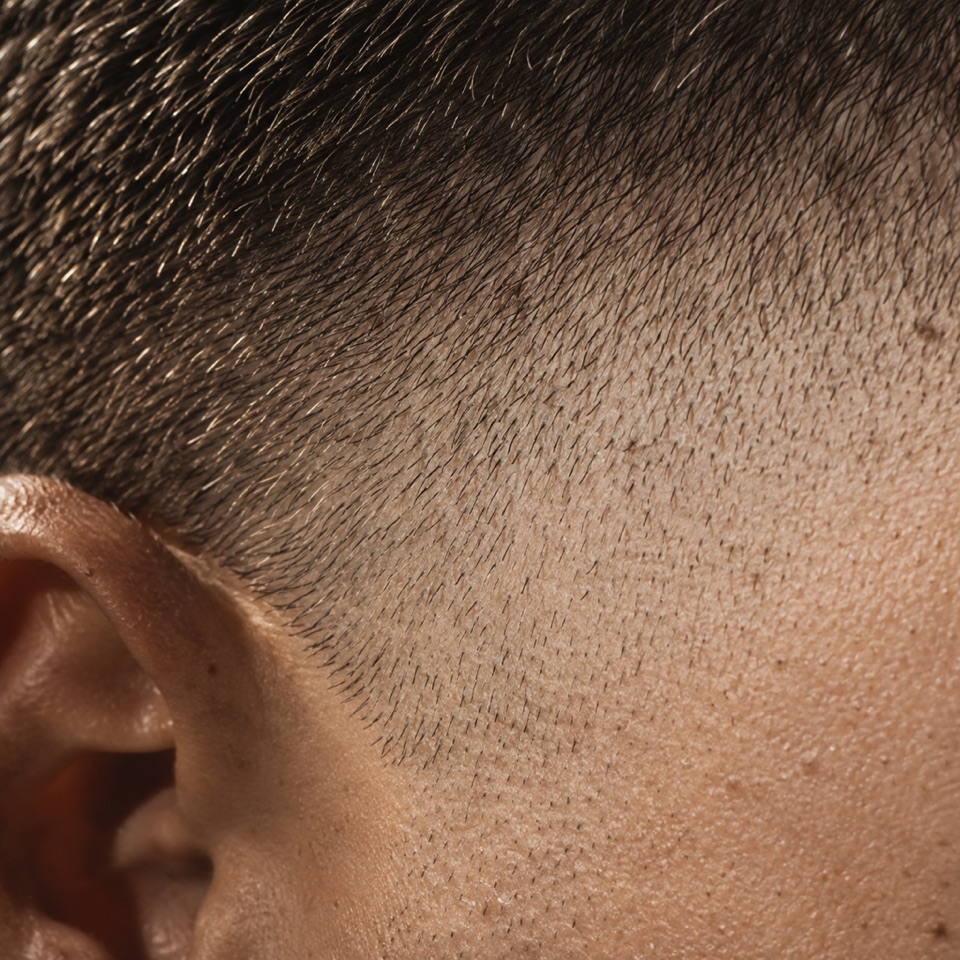
The two most useful things on this page are the shrinkage numbers and the sentence about cutting dry. If you read nothing else, read those.
Shrinkage, in numbers
Curly hair does not hang at its full length. It coils, so the visible height is shorter than the strand. How much shorter depends on how tight the curl is.
| Curl pattern | Typical shrinkage | 4 cm of hair looks like |
|---|---|---|
| Wavy | 10 to 20% | About 3.4 cm |
| Loose curl | 20 to 35% | About 2.8 cm |
| Tight curl | 35 to 50% | About 2.4 cm |
| Coily | 50 to 75% | About 1.4 cm |
Those are rough ranges rather than fixed figures, and your own hair may sit outside them. The point is the scale of the effect. On coily hair, more than half the length can be invisible, which means a number given in centimetres describes something very different from what you will see in the mirror.
Cut it dry
This is the single highest value request on this page. Wet curly hair stretches out to something close to its full length. A barber cutting it wet is cutting a shape that will not exist once it dries and springs up.
Cut dry, the barber sees the actual shape: where the curls sit, how the volume distributes, which sections are denser. They can cut to the silhouette you will walk out with rather than predicting it.
Some barbers prefer to work wet, and on straight hair that is perfectly reasonable. On curly hair it is a real limitation. If they insist, ask them to at least dry it and check the shape before the final pass. A good barber will already be doing this.
One caveat worth being fair about: the clipper work on the perimeter is generally done on hair short enough that wet or dry makes little difference. The dry-cut argument applies to the top and to the blend zone, which is where the shape lives.
Why curls suit a high taper
Curly hair has two genuine advantages here.
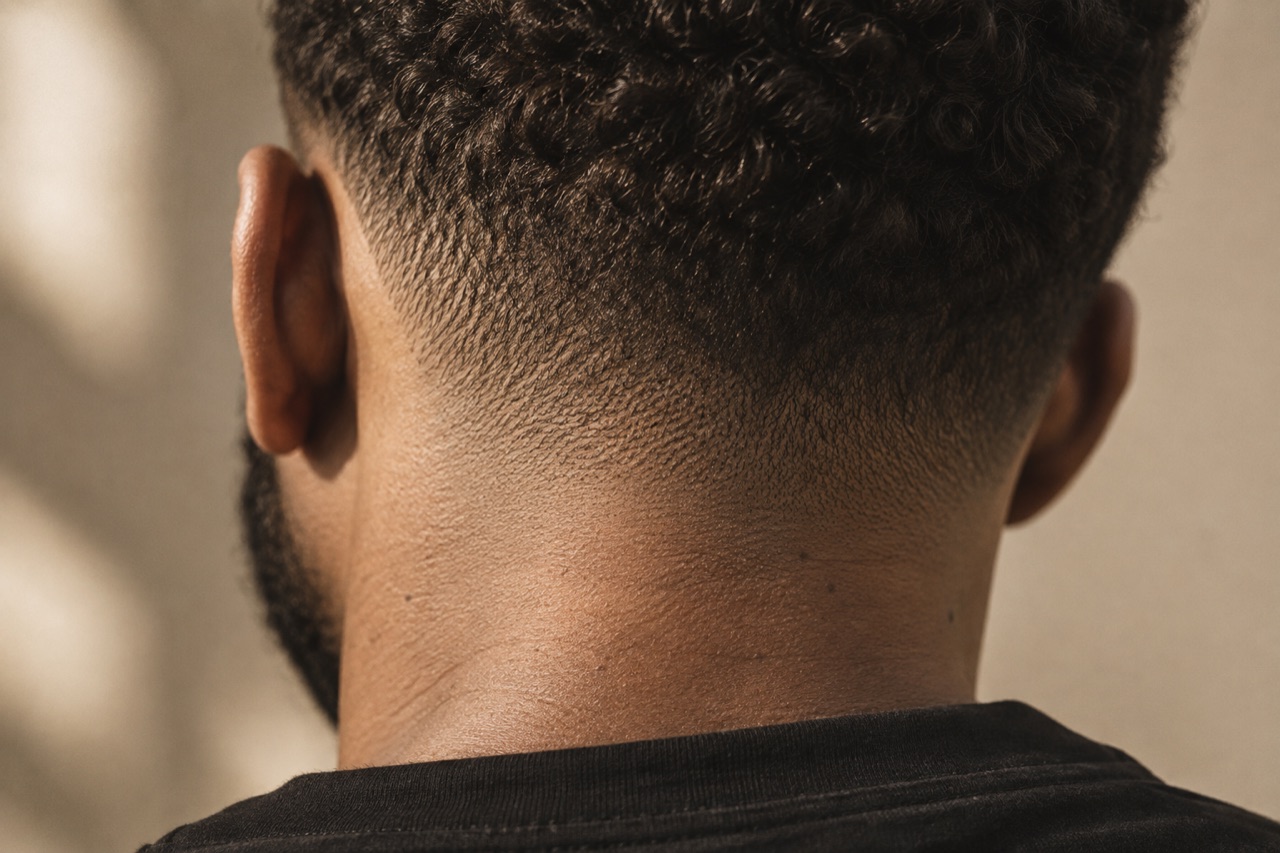
The blend is forgiving. On fine straight hair, every boundary between guard lengths shows, and a slightly rushed blend reads as stripes. Curl pattern breaks up those lines optically. A blend that would look mediocre on straight hair can look clean on curls.
The contrast works. A high taper exists to create contrast between a short perimeter and a fuller top. Curly hair has volume built in, so that contrast comes easily without needing product or styling to create it.
The trade-off is that curls also hide problems until they do not. An uneven blend can look fine on day one and become visible in week three as the hair grows and the curl pattern shifts. Ask for the back to be checked with a mirror.
How short to finish
The standard three options apply, but curl changes how each one looks.
Very high contrast against curl volume. Striking, and a two week cycle.
Usually the best choice. Enough contrast without a hard edge against soft curl.
On tight curl this can already read as quite short because of shrinkage.
That last note is worth expanding. On coily hair, a #1 guard produces something that looks much shorter than 3 millimetres suggests, because the curl compresses. If you want a soft perimeter on tightly curled hair, consider a #2 rather than a #1. The guard chart has the full list.
Keeping the curl healthy
A high taper puts the top of your hair on display, so its condition matters more than it would with a lower cut.
- Wash less than you think, condition more. Curly hair tends to be drier because the cuticle does not lie flat, so it loses moisture more readily.
- Dry with a microfibre towel or a t-shirt. Terry towelling roughs up the cuticle and breaks the curl clump.
- Apply product to damp hair, not dry. Cream and gel distribute properly through wet hair and lock the curl shape as it dries.
- Leave it alone while it dries. Touching a drying curl is what turns definition into frizz.
- Ask about dusting rather than a full cut. Taking a few millimetres off the ends keeps the top tidy without losing the height you grew.
None of this is specific to a high taper, but the cut makes the top the focal point, so the difference between well kept and neglected curl is more visible than it would be otherwise.
The brief
- A high taper, starting at the temple corner. Point to it.
- Cut the top dry so you can see the real shape.
- Finishing on a shadow, or a #2 if my curl is tight.
- Blend it long, and keep the weight above the taper.
- Describe the top as finished height, not as length removed.
- Show me the back with a mirror before you finish.
Line two and line five are the ones that matter for curly hair specifically. Everything else is the same brief you would give for any high taper.
Common questions
Should curly hair be cut wet or dry for a taper fade?
Dry, at least for the top and the blend zone. Wet curly hair stretches close to its full length, so a shape cut wet will not be the shape you have once it dries and the curl springs up.
How much does curly hair shrink after cutting?
Roughly 10 to 20 percent for wavy hair, 20 to 35 percent for loose curls, 35 to 50 percent for tight curls and 50 to 75 percent for coily hair. Ranges vary between individuals.
Does a high taper fade work on curly hair?
Yes, and it is one of the better textures for it. Curl pattern breaks up the boundaries between guard lengths, so the blend looks softer, and the natural volume on top creates the contrast the cut depends on.
What guard should I use on tightly curled hair?
Consider going one size longer than you would on straight hair. Because curl compresses, a #1 on coily hair can look considerably shorter than 3 millimetres suggests, so a #2 often gives the softer perimeter people expect.
Keep reading
All guidesThe high taper fade
Where a high taper actually starts, how it differs from a high fade, how much side weight you keep, and the wording that gets you the version you want.
The taper fade, from the chair
What a taper fade actually is, how high it can sit, how short it can finish, and how to pick the version that suits your hair and your schedule.
How to ask for a taper fade
How to ask for a taper fade: the exact sentences to say at the chair, in the order a barber builds the cut. Height, finish, blend, top length and two checks.